Blog
Industry Insights
Where PR coverage goes to die
Where PR coverage goes to die
Where PR coverage goes to die

Ask a PR team where their coverage lives, and the honest answer is: everywhere.
Some of it's in a Dropbox folder. Some in a spreadsheet a former colleague built. A few screenshots in a Slack thread. A clipping in an email from three weeks ago. The print PDF someone saved to their desktop. Every piece exists. None of it is in the same place.
This is the reporting silo. And it quietly costs agencies and brands more than almost anything else in the workflow.
The problem isn't the work. It's where it ends up.
PR teams aren't short on coverage. They're short on a single place to keep it.
A great month of results gets scattered the moment it lands. Online coverage in one tool. Social mentions in another. Print in a folder. Broadcast in an inbox. The work is done brilliantly, then immediately broken into pieces across half a dozen locations, none of which talk to each other.
So when it's time to report, nobody is reporting. They're reassembling.
Every monthly report that starts with "let me just pull everything together" is a report that started hours before anyone wrote a single insight.
What the silo actually costs
The obvious cost is time. Half a day spent hunting down coverage that already exists, before the thinking even begins.
The hidden costs are worse. Coverage gets missed entirely, because nobody remembered the piece saved in a folder they don't open. Numbers don't match, because the spreadsheet and the tool counted differently. And the story stays shallow, because when you're spending your energy finding the data, you have none left to interpret it. The silo doesn't just slow the report down. It caps how good the report can ever be.
Why it keeps happening
No one designs a reporting silo. It accumulates.
You add a tool for social. A spreadsheet for print because the tool doesn't cover it. A shared folder for the screenshots that don't fit anywhere else. Each fix is sensible on its own. Together they become the exact problem you were trying to solve: coverage in more places than any one person can hold in their head.
And because it built up gradually, it feels normal. The half-day of assembly becomes just how reporting works. It isn't. It's just what happens when the work has nowhere to live.
What it looks like when the silo is closed
Picture the opposite. Every piece of coverage, online, social, print and broadcast, landing in one place automatically as it happens.
No folder to check. No spreadsheet to update. No Slack thread to scroll back through. When the coverage lives in one space from the moment it appears, the report stops being a project you build and becomes an output you open. The half-day of assembly disappears, because there's nothing to assemble. Everything is already there.
That's the shift. Not working harder to keep the silo organised. Not having a silo at all.
What to do next
If your reporting starts with a scavenger hunt across folders, spreadsheets and threads, the bottleneck was never your team. It's the fact that your coverage has nowhere to live.
MVO brings all your pieces of coverage into one space automatically, across online, social and print, so reporting is something you open, not something you assemble. One place. Every mention. Ready when you are.
Ask a PR team where their coverage lives, and the honest answer is: everywhere.
Some of it's in a Dropbox folder. Some in a spreadsheet a former colleague built. A few screenshots in a Slack thread. A clipping in an email from three weeks ago. The print PDF someone saved to their desktop. Every piece exists. None of it is in the same place.
This is the reporting silo. And it quietly costs agencies and brands more than almost anything else in the workflow.
The problem isn't the work. It's where it ends up.
PR teams aren't short on coverage. They're short on a single place to keep it.
A great month of results gets scattered the moment it lands. Online coverage in one tool. Social mentions in another. Print in a folder. Broadcast in an inbox. The work is done brilliantly, then immediately broken into pieces across half a dozen locations, none of which talk to each other.
So when it's time to report, nobody is reporting. They're reassembling.
Every monthly report that starts with "let me just pull everything together" is a report that started hours before anyone wrote a single insight.
What the silo actually costs
The obvious cost is time. Half a day spent hunting down coverage that already exists, before the thinking even begins.
The hidden costs are worse. Coverage gets missed entirely, because nobody remembered the piece saved in a folder they don't open. Numbers don't match, because the spreadsheet and the tool counted differently. And the story stays shallow, because when you're spending your energy finding the data, you have none left to interpret it. The silo doesn't just slow the report down. It caps how good the report can ever be.
Why it keeps happening
No one designs a reporting silo. It accumulates.
You add a tool for social. A spreadsheet for print because the tool doesn't cover it. A shared folder for the screenshots that don't fit anywhere else. Each fix is sensible on its own. Together they become the exact problem you were trying to solve: coverage in more places than any one person can hold in their head.
And because it built up gradually, it feels normal. The half-day of assembly becomes just how reporting works. It isn't. It's just what happens when the work has nowhere to live.
What it looks like when the silo is closed
Picture the opposite. Every piece of coverage, online, social, print and broadcast, landing in one place automatically as it happens.
No folder to check. No spreadsheet to update. No Slack thread to scroll back through. When the coverage lives in one space from the moment it appears, the report stops being a project you build and becomes an output you open. The half-day of assembly disappears, because there's nothing to assemble. Everything is already there.
That's the shift. Not working harder to keep the silo organised. Not having a silo at all.
What to do next
If your reporting starts with a scavenger hunt across folders, spreadsheets and threads, the bottleneck was never your team. It's the fact that your coverage has nowhere to live.
MVO brings all your pieces of coverage into one space automatically, across online, social and print, so reporting is something you open, not something you assemble. One place. Every mention. Ready when you are.

Product Updates
How to track influencer campaign coverage without a spreadsheet
Our Brand Evaluation Dashboards centralise all your online, social and print media in one space, calculates your figures for you and allow you to report from one integrated system.
Product Updates
How to track influencer campaign coverage without a spreadsheet
Our Brand Evaluation Dashboards centralise all your online, social and print media in one space, calculates your figures for you and allow you to report from one integrated system.
Industry Insights
What is share of voice in PR and why does it matter?
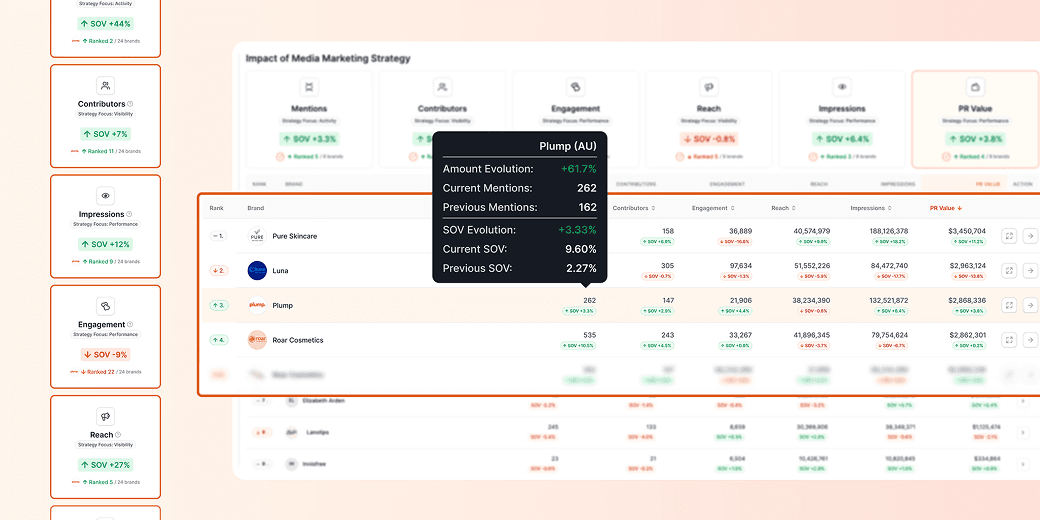
Our Brand Evaluation Dashboards centralise all your online, social and print media in one space, calculates your figures for you and allow you to report from one integrated system.
Industry Insights
What is share of voice in PR and why does it matter?
Our Brand Evaluation Dashboards centralise all your online, social and print media in one space, calculates your figures for you and allow you to report from one integrated system.

Industry Insights
How to prove PR ROI to clients
Our Brand Evaluation Dashboards centralise all your online, social and print media in one space, calculates your figures for you and allow you to report from one integrated system.
Industry Insights
How to prove PR ROI to clients
Our Brand Evaluation Dashboards centralise all your online, social and print media in one space, calculates your figures for you and allow you to report from one integrated system.
Product Updates
How to track influencer campaign coverage without a spreadsheet
Our Brand Evaluation Dashboards centralise all your online, social and print media in one space, calculates your figures for you and allow you to report from one integrated system.
Industry Insights
What is share of voice in PR and why does it matter?
Our Brand Evaluation Dashboards centralise all your online, social and print media in one space, calculates your figures for you and allow you to report from one integrated system.
Industry Insights
How to prove PR ROI to clients
Our Brand Evaluation Dashboards centralise all your online, social and print media in one space, calculates your figures for you and allow you to report from one integrated system.

Industry Insights
Why Australian Fashion Week looks different in 2026 and what it means for brands
Our Brand Evaluation Dashboards centralise all your online, social and print media in one space, calculates your figures for you and allow you to report from one integrated system.
Are you ready to automate your PR reporting?
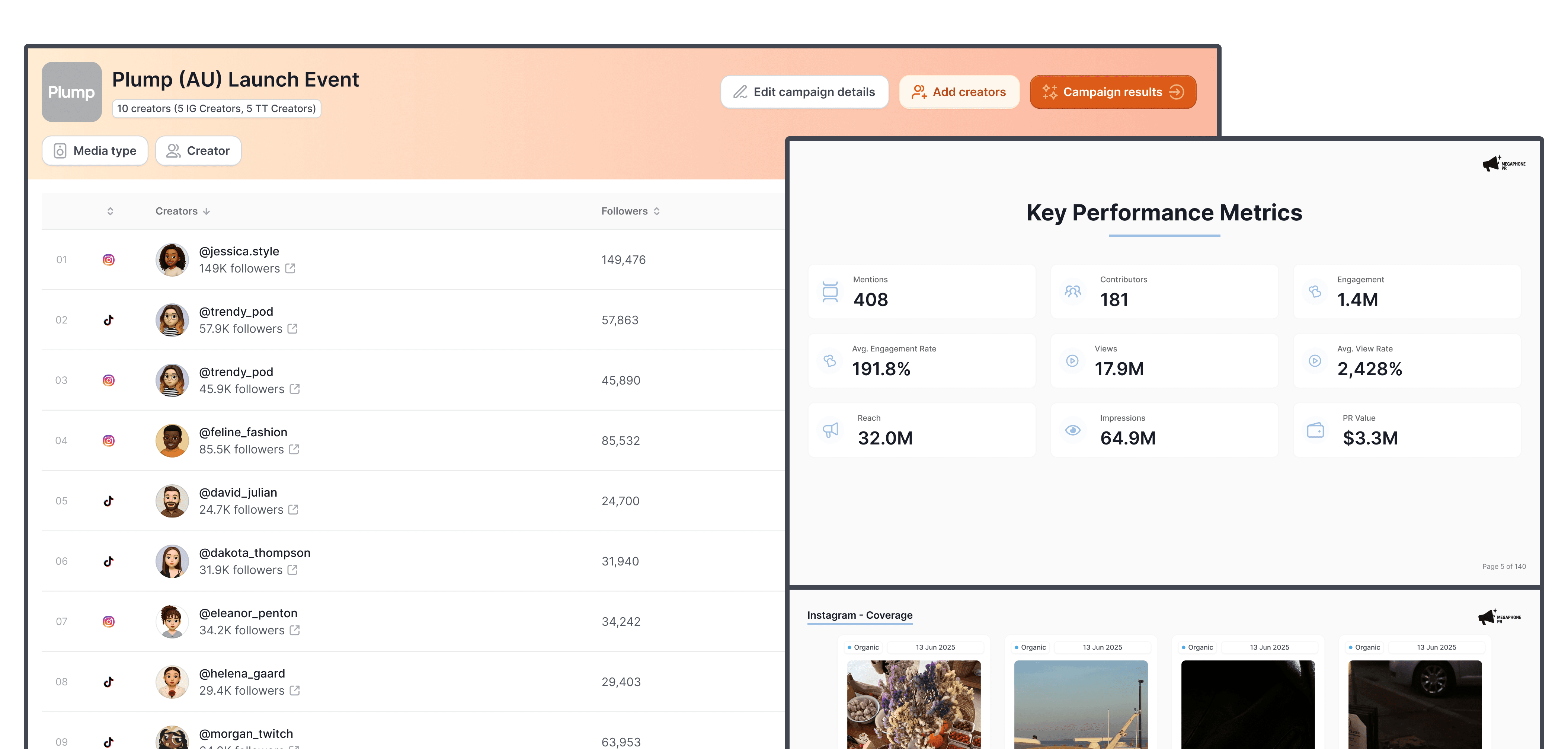
In just 20-minutes, we'll show you how MVO can supercharge your strategy with powerful automation tools to ensure effortless PR collaboration and reporting.
The Collaborative Intelligence Engine for





Are you ready to automate your PR reporting?
In just 20-minutes, we'll show you how MVO can supercharge your strategy with powerful automation tools to ensure effortless PR collaboration and reporting.
The Collaborative Intelligence Engine for
Are you ready to automate your PR reporting?
In just 20-minutes, we'll show you how MVO can supercharge your strategy with powerful automation tools to ensure effortless PR collaboration and reporting.