Blog
Industry Insights
How to prove PR ROI to clients
How to prove PR ROI to clients
How to prove PR ROI to clients

Most PR agencies are brilliant at the work. They're not always brilliant at proving it.
Coverage goes up. Engagement spikes. A campaign lands exactly as planned. And then someone in a client meeting asks the question that still makes rooms go quiet:
So, what was the return on that?
The honest answer, for most agencies, is that the data exists somewhere. It's just spread across a clipping service, a spreadsheet, a shared Google Doc, and three separate Instagram screenshots saved in a Slack thread. Turning that into a clear, confident answer for a client, one that connects PR activity to business outcomes, takes hours most teams don't have.
This is the gap that's costing agencies budget, trust, and retainer renewals.
Why "coverage volume" stopped being enough
For a long time, coverage volume was the default proxy for PR performance. How many hits. How much reach. What the advertising equivalent value would have been.
Clients have become more sophisticated. The same executives who sign off on PR budgets are now reviewing marketing attribution dashboards that show cost per acquisition down to the dollar. When PR sits next to that data as "we got 47 pieces of coverage," the comparison is uncomfortable.
That doesn't mean coverage doesn't matter. It means coverage alone doesn't make the case.
The metrics that actually move the conversation
Proving PR ROI isn't about finding a single magic number. It's about building a picture that connects what you did to what changed for the brand.
The metrics that do this most effectively are:
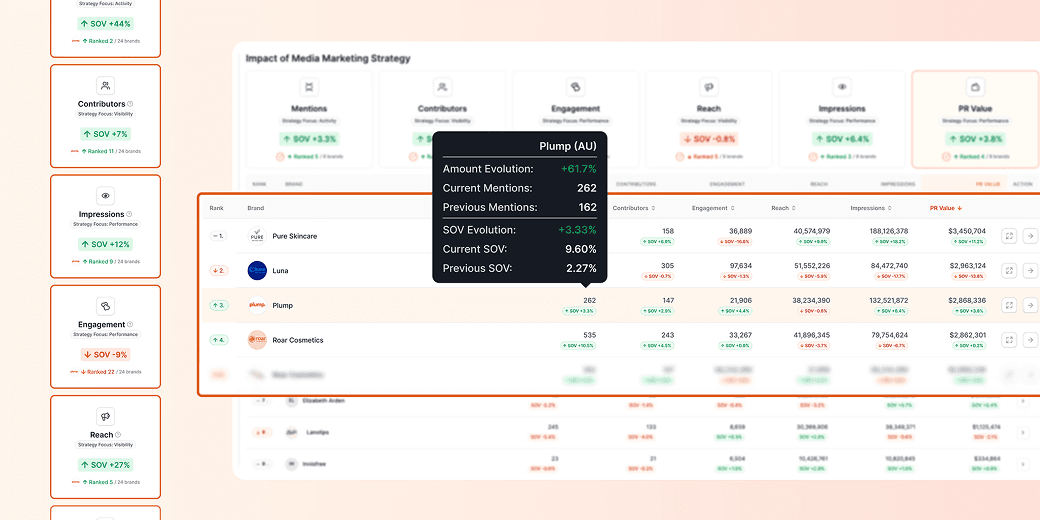
Share of voice. Not just how much coverage your client got, but how their coverage compares to competitors in the same period. A client who grew from 18% to 31% share of voice in their category during a campaign has a result that means something, regardless of raw volume.
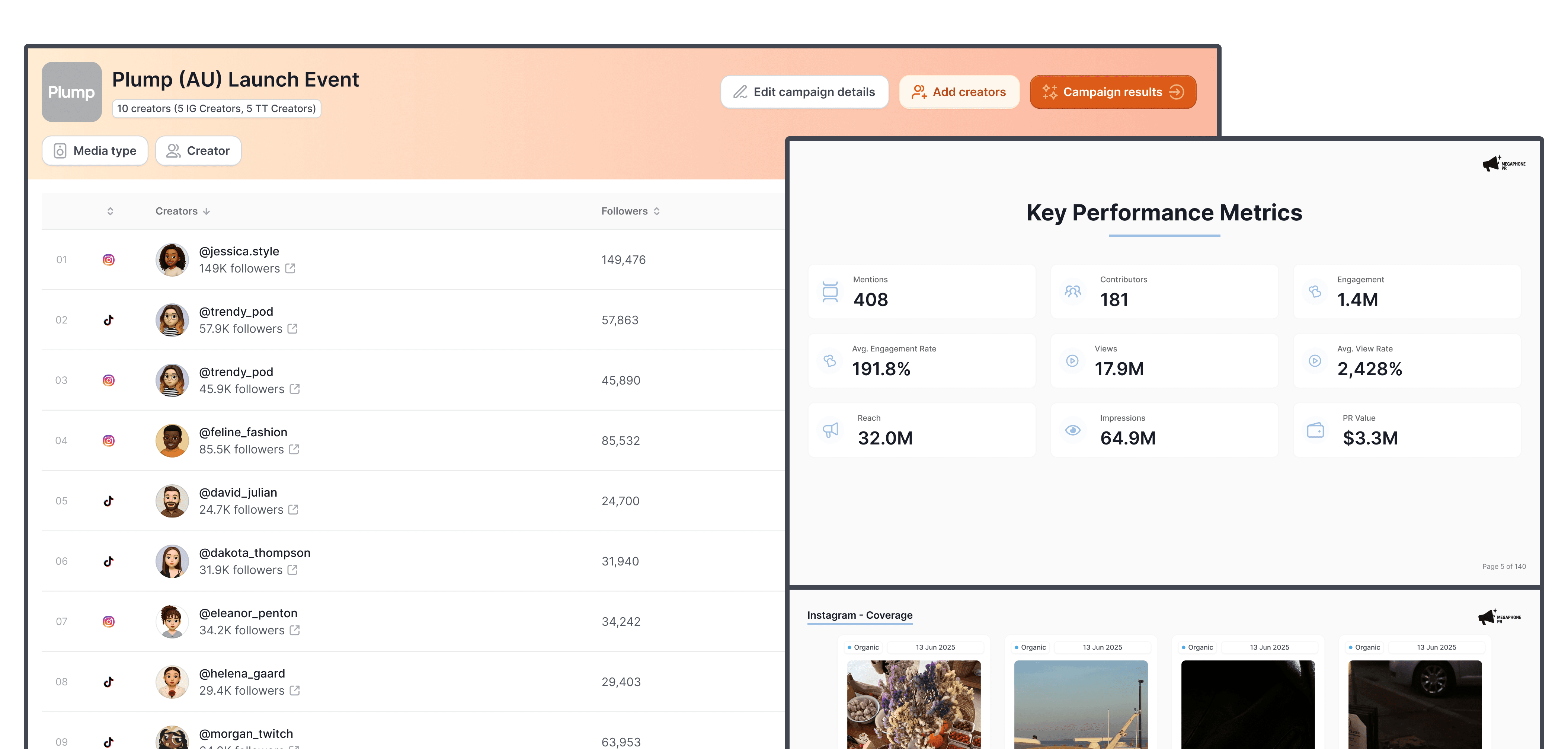
Coverage value across every medium. A print feature, an Instagram story, and an online article aren't directly comparable on reach alone. PR value gives you a single, consistent number across every medium so clients can see the full picture of what their coverage is actually worth, not just where it appeared.
Campaign attribution. When a product launch, event, or partnership drives a measurable spike in brand mentions, search interest, or direct traffic, that connection is your ROI story. The data is usually there. It just needs to be pulled together in one place.
The reporting problem is actually a data problem
Most agencies aren't failing to prove ROI because they don't understand the metrics. They're failing because the data lives in too many places.
Social mentions in one tool. Online coverage in another. Print in a spreadsheet. Influencer activity tracked manually. By the time a report is due, someone is spending half a day pulling it all together. And the result still doesn't tell a clear story because the data isn't speaking to each other.
When coverage tracking, benchmarking, and reporting sit in a single platform, the picture assembles itself. A campaign is a filter. A competitor is a benchmark. The report is the output, not the project.
That is the difference between agencies that spend 20 hours+ on a monthly report and agencies that spend 20 minutes through automation. Work smarter, not harder.
What confident ROI reporting looks like in practice
The agencies that win on this aren't producing more data. They're producing cleaner narratives.
A strong PR ROI report answers three questions:
What did we do? The campaign activity, coverage secured, and channels activated.
What changed? Share of voice movement, reach across relevant outlets, engagement from creator activity.
What does that mean for the brand? The strategic interpretation. Whether the brand is growing, holding, or losing ground in its category, and what that signals for next quarter.
Clients don't need a 40-slide deck to feel confident about their investment. They need a clear answer to each of those three questions, backed by data they can trust.
The shift from reporting agency to strategic partner
There's a version of client reporting that is purely administrative. Here is what happened last month. Here are the numbers. See you next time.
And there's a version that positions your agency as the most informed voice in the room on what's happening to their brand in market.
The second version isn't more work. It's the same data, framed differently. When you can show a client not just what their coverage looked like, but how it compares to their three closest competitors, what drove their share of voice shift, and where the next opportunity sits, that's not a reporting update. That's a strategic recommendation.
That's what retains clients. And it's what justifies increasing the budget.
MVO gives PR agencies a single platform for coverage tracking, benchmarking, and automated reporting, so your data tells the story and you spend less time building slides.
Most PR agencies are brilliant at the work. They're not always brilliant at proving it.
Coverage goes up. Engagement spikes. A campaign lands exactly as planned. And then someone in a client meeting asks the question that still makes rooms go quiet:
So, what was the return on that?
The honest answer, for most agencies, is that the data exists somewhere. It's just spread across a clipping service, a spreadsheet, a shared Google Doc, and three separate Instagram screenshots saved in a Slack thread. Turning that into a clear, confident answer for a client, one that connects PR activity to business outcomes, takes hours most teams don't have.
This is the gap that's costing agencies budget, trust, and retainer renewals.
Why "coverage volume" stopped being enough
For a long time, coverage volume was the default proxy for PR performance. How many hits. How much reach. What the advertising equivalent value would have been.
Clients have become more sophisticated. The same executives who sign off on PR budgets are now reviewing marketing attribution dashboards that show cost per acquisition down to the dollar. When PR sits next to that data as "we got 47 pieces of coverage," the comparison is uncomfortable.
That doesn't mean coverage doesn't matter. It means coverage alone doesn't make the case.
The metrics that actually move the conversation
Proving PR ROI isn't about finding a single magic number. It's about building a picture that connects what you did to what changed for the brand.
The metrics that do this most effectively are:
Share of voice. Not just how much coverage your client got, but how their coverage compares to competitors in the same period. A client who grew from 18% to 31% share of voice in their category during a campaign has a result that means something, regardless of raw volume.
Coverage value across every medium. A print feature, an Instagram story, and an online article aren't directly comparable on reach alone. PR value gives you a single, consistent number across every medium so clients can see the full picture of what their coverage is actually worth, not just where it appeared.
Campaign attribution. When a product launch, event, or partnership drives a measurable spike in brand mentions, search interest, or direct traffic, that connection is your ROI story. The data is usually there. It just needs to be pulled together in one place.
The reporting problem is actually a data problem
Most agencies aren't failing to prove ROI because they don't understand the metrics. They're failing because the data lives in too many places.
Social mentions in one tool. Online coverage in another. Print in a spreadsheet. Influencer activity tracked manually. By the time a report is due, someone is spending half a day pulling it all together. And the result still doesn't tell a clear story because the data isn't speaking to each other.
When coverage tracking, benchmarking, and reporting sit in a single platform, the picture assembles itself. A campaign is a filter. A competitor is a benchmark. The report is the output, not the project.
That is the difference between agencies that spend 20 hours+ on a monthly report and agencies that spend 20 minutes through automation. Work smarter, not harder.
What confident ROI reporting looks like in practice
The agencies that win on this aren't producing more data. They're producing cleaner narratives.
A strong PR ROI report answers three questions:
What did we do? The campaign activity, coverage secured, and channels activated.
What changed? Share of voice movement, reach across relevant outlets, engagement from creator activity.
What does that mean for the brand? The strategic interpretation. Whether the brand is growing, holding, or losing ground in its category, and what that signals for next quarter.
Clients don't need a 40-slide deck to feel confident about their investment. They need a clear answer to each of those three questions, backed by data they can trust.
The shift from reporting agency to strategic partner
There's a version of client reporting that is purely administrative. Here is what happened last month. Here are the numbers. See you next time.
And there's a version that positions your agency as the most informed voice in the room on what's happening to their brand in market.
The second version isn't more work. It's the same data, framed differently. When you can show a client not just what their coverage looked like, but how it compares to their three closest competitors, what drove their share of voice shift, and where the next opportunity sits, that's not a reporting update. That's a strategic recommendation.
That's what retains clients. And it's what justifies increasing the budget.
MVO gives PR agencies a single platform for coverage tracking, benchmarking, and automated reporting, so your data tells the story and you spend less time building slides.

Industry Insights
Where PR coverage goes to die
Our Brand Evaluation Dashboards centralise all your online, social and print media in one space, calculates your figures for you and allow you to report from one integrated system.
Industry Insights
Where PR coverage goes to die
Our Brand Evaluation Dashboards centralise all your online, social and print media in one space, calculates your figures for you and allow you to report from one integrated system.

Product Updates
How to track influencer campaign coverage without a spreadsheet
Our Brand Evaluation Dashboards centralise all your online, social and print media in one space, calculates your figures for you and allow you to report from one integrated system.
Product Updates
How to track influencer campaign coverage without a spreadsheet
Our Brand Evaluation Dashboards centralise all your online, social and print media in one space, calculates your figures for you and allow you to report from one integrated system.
Industry Insights
What is share of voice in PR and why does it matter?
Our Brand Evaluation Dashboards centralise all your online, social and print media in one space, calculates your figures for you and allow you to report from one integrated system.
Industry Insights
What is share of voice in PR and why does it matter?
Our Brand Evaluation Dashboards centralise all your online, social and print media in one space, calculates your figures for you and allow you to report from one integrated system.
Industry Insights
Where PR coverage goes to die
Our Brand Evaluation Dashboards centralise all your online, social and print media in one space, calculates your figures for you and allow you to report from one integrated system.
Product Updates
How to track influencer campaign coverage without a spreadsheet
Our Brand Evaluation Dashboards centralise all your online, social and print media in one space, calculates your figures for you and allow you to report from one integrated system.
Industry Insights
What is share of voice in PR and why does it matter?
Our Brand Evaluation Dashboards centralise all your online, social and print media in one space, calculates your figures for you and allow you to report from one integrated system.

Industry Insights
Why Australian Fashion Week looks different in 2026 and what it means for brands
Our Brand Evaluation Dashboards centralise all your online, social and print media in one space, calculates your figures for you and allow you to report from one integrated system.
Are you ready to automate your PR reporting?
In just 20-minutes, we'll show you how MVO can supercharge your strategy with powerful automation tools to ensure effortless PR collaboration and reporting.
The Collaborative Intelligence Engine for




Are you ready to automate your PR reporting?
In just 20-minutes, we'll show you how MVO can supercharge your strategy with powerful automation tools to ensure effortless PR collaboration and reporting.
The Collaborative Intelligence Engine for
Are you ready to automate your PR reporting?
In just 20-minutes, we'll show you how MVO can supercharge your strategy with powerful automation tools to ensure effortless PR collaboration and reporting.