Blog
Product Updates
How to track influencer campaign coverage without a spreadsheet
How to track influencer campaign coverage without a spreadsheet
How to track influencer campaign coverage without a spreadsheet

If you've run an influencer campaign recently, you already know what comes next.
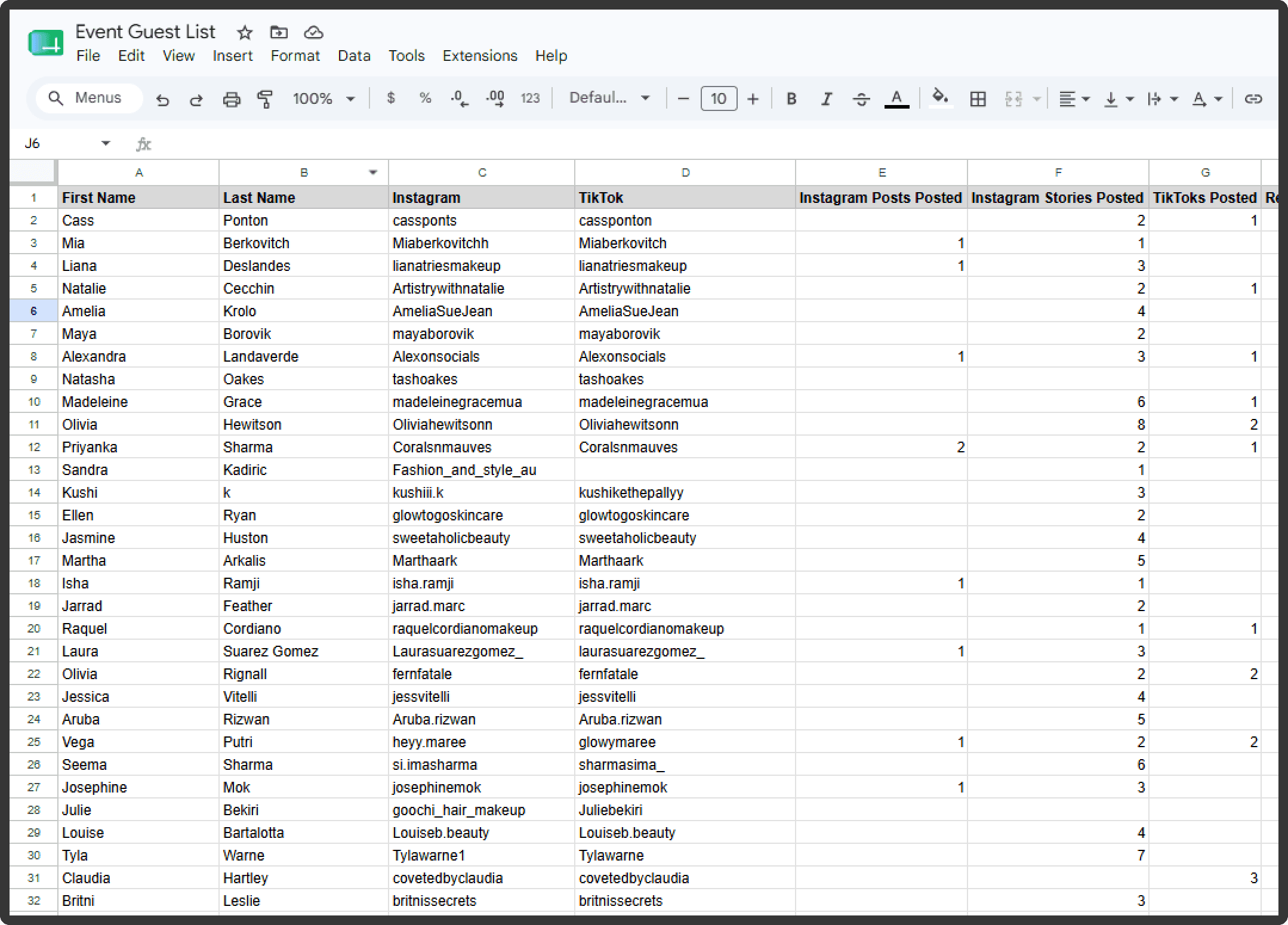
The event wraps. The creators post. And then you spend the next two days opening Instagram, scrolling TikTok, and manually searching for every piece of content your creator list generated. Screenshot by screenshot. Post by post. Row by row in a spreadsheet that was already out of date before the event started.
It works. Until it doesn't. And at a certain volume of creators, it stops working fast.
Why spreadsheets break down at campaign scale
A spreadsheet is a perfectly fine place to store a creator list. It is not a campaign tracking tool.
The problem isn't the spreadsheet itself. It's everything around it. The manual searching that fills it. The metrics you have to pull individually from each post. The time between your event ending and your report being ready. The fact that by the time you've found everything, something has already been missed.
Most agencies running campaigns with 30 or more creators hit the same wall. The admin required to track coverage accurately takes longer than the campaign itself.
2 to 3 days is the average time from event to completed campaign report under a manual workflow.
30 or more is the average number of steps involved in tracking, filtering, and reporting on a single campaign.
That's not a reporting problem. That's a structural one.
What a better process actually looks like
The agencies that have moved away from manual tracking share a few things in common.
They set up their campaign before the event, not after. Creator lists, date ranges, and tracking windows are configured in advance, so the moment the campaign goes live, coverage is already being captured. There's no scramble on the other side. They don't search for coverage manually.
When a campaign is set up correctly, the coverage filters itself. The posts your creators made during your campaign window appear in one place, separated from your general brand coverage, without anyone having to find them individually.
They generate reports the morning after. Not two days later. Not at the end of the week. The morning after, because the data is already there.
The shift isn't about working harder or being more organised. It's about having a workflow that matches how campaigns actually run.
The creator tracking checklist
If you're still running campaigns manually, here's what a cleaner process looks like at each stage:
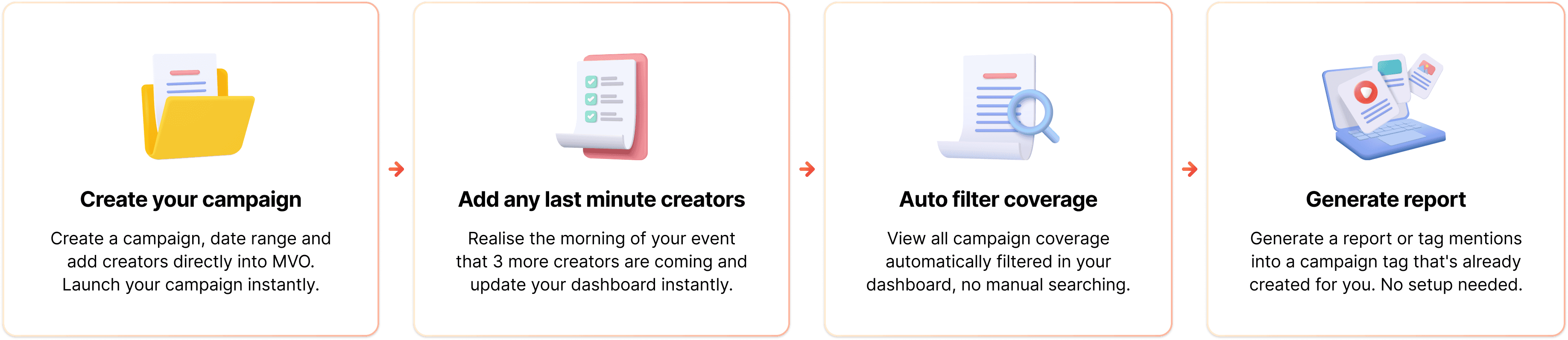
Before the event Set up your campaign with a name, date range, and tracking window. Add your creator list by handle and platform. Validate who can be tracked before the event starts, not after. Add any last minute creators the morning of, not in a panic email to someone else.
During the campaign Don't touch it. If the setup is right, coverage is being captured automatically as your creators post.
After the event Open your dashboard. Your campaign coverage is already filtered and separated from your general brand mentions. Review it, tag it, and generate your report. The whole process takes minutes rather than days.
In the client meeting Show share of voice movement, total PR value across every piece of coverage, and how the campaign performed against previous benchmarks. Not a list of screenshots. A result.
The part most agencies underestimate
Setting up a campaign before an event feels like extra work when you're already busy. It isn't. It's the work you would have done anyway, just moved to a point in time where it costs you nothing, because the event hasn't happened yet.
The two days of manual searching after the event? That's the expensive part. That's the time that was always going to be spent. Moving the setup earlier means the expensive part disappears entirely.
Every hour spent on post-event admin is an hour not spent on the next campaign, the next client, or the strategy that actually grows the account.
What to do next
If your current campaign tracking process involves a spreadsheet, manual searching, and a report that arrives days after your event, the bottleneck isn't effort. It's the workflow.
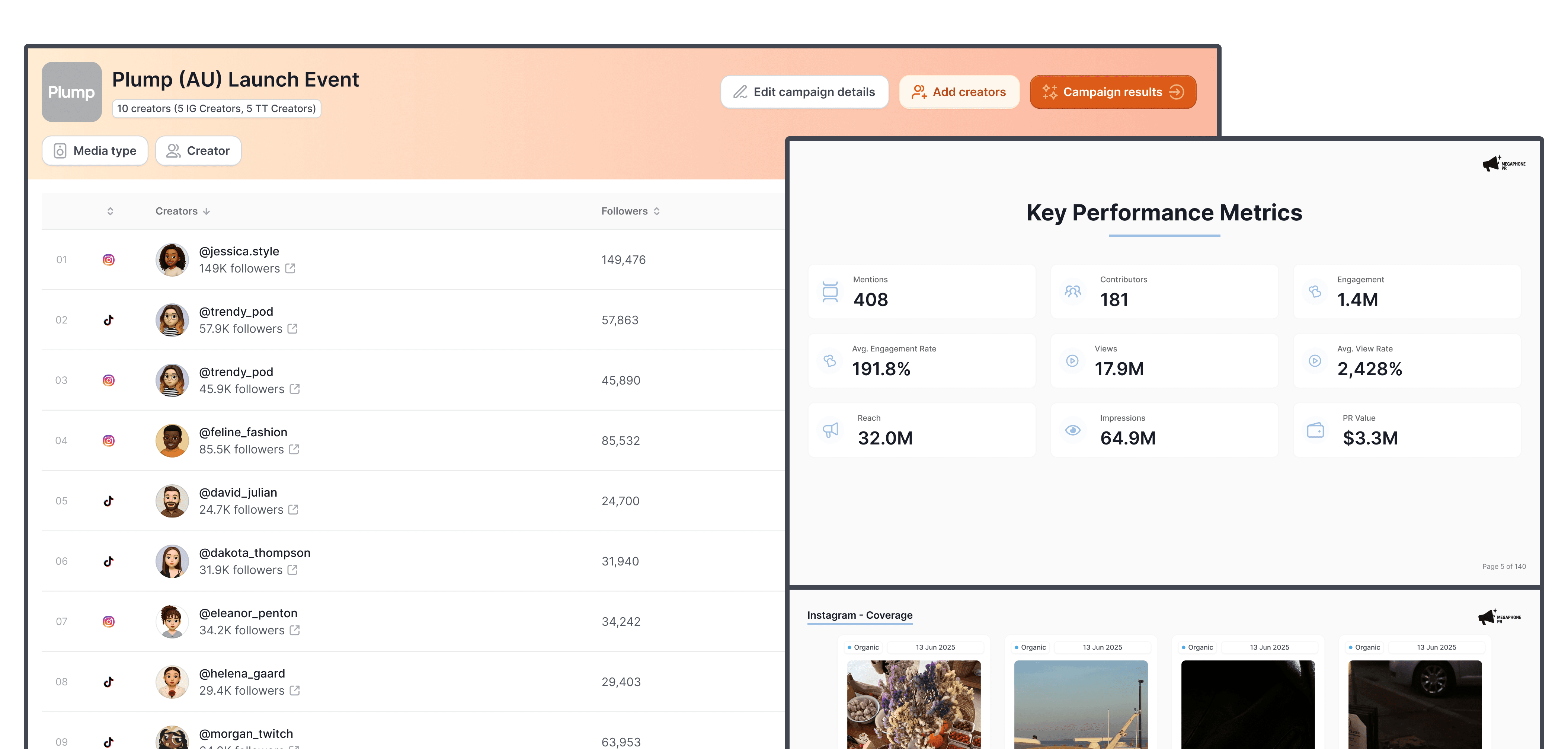
MVO's Creators & Campaigns tool lets you set up a campaign in minutes, validate your creator list instantly, and walk in the morning after your event with coverage already filtered and ready to report on. No spreadsheets. No manual searching. No emails back and forth to get it live.
If you've run an influencer campaign recently, you already know what comes next.
The event wraps. The creators post. And then you spend the next two days opening Instagram, scrolling TikTok, and manually searching for every piece of content your creator list generated. Screenshot by screenshot. Post by post. Row by row in a spreadsheet that was already out of date before the event started.
It works. Until it doesn't. And at a certain volume of creators, it stops working fast.
Why spreadsheets break down at campaign scale
A spreadsheet is a perfectly fine place to store a creator list. It is not a campaign tracking tool.
The problem isn't the spreadsheet itself. It's everything around it. The manual searching that fills it. The metrics you have to pull individually from each post. The time between your event ending and your report being ready. The fact that by the time you've found everything, something has already been missed.
Most agencies running campaigns with 30 or more creators hit the same wall. The admin required to track coverage accurately takes longer than the campaign itself.
2 to 3 days is the average time from event to completed campaign report under a manual workflow.
30 or more is the average number of steps involved in tracking, filtering, and reporting on a single campaign.
That's not a reporting problem. That's a structural one.
What a better process actually looks like
The agencies that have moved away from manual tracking share a few things in common.
They set up their campaign before the event, not after. Creator lists, date ranges, and tracking windows are configured in advance, so the moment the campaign goes live, coverage is already being captured. There's no scramble on the other side. They don't search for coverage manually.
When a campaign is set up correctly, the coverage filters itself. The posts your creators made during your campaign window appear in one place, separated from your general brand coverage, without anyone having to find them individually.
They generate reports the morning after. Not two days later. Not at the end of the week. The morning after, because the data is already there.
The shift isn't about working harder or being more organised. It's about having a workflow that matches how campaigns actually run.
The creator tracking checklist
If you're still running campaigns manually, here's what a cleaner process looks like at each stage:
Before the event Set up your campaign with a name, date range, and tracking window. Add your creator list by handle and platform. Validate who can be tracked before the event starts, not after. Add any last minute creators the morning of, not in a panic email to someone else.
During the campaign Don't touch it. If the setup is right, coverage is being captured automatically as your creators post.
After the event Open your dashboard. Your campaign coverage is already filtered and separated from your general brand mentions. Review it, tag it, and generate your report. The whole process takes minutes rather than days.
In the client meeting Show share of voice movement, total PR value across every piece of coverage, and how the campaign performed against previous benchmarks. Not a list of screenshots. A result.
The part most agencies underestimate
Setting up a campaign before an event feels like extra work when you're already busy. It isn't. It's the work you would have done anyway, just moved to a point in time where it costs you nothing, because the event hasn't happened yet.
The two days of manual searching after the event? That's the expensive part. That's the time that was always going to be spent. Moving the setup earlier means the expensive part disappears entirely.
Every hour spent on post-event admin is an hour not spent on the next campaign, the next client, or the strategy that actually grows the account.
What to do next
If your current campaign tracking process involves a spreadsheet, manual searching, and a report that arrives days after your event, the bottleneck isn't effort. It's the workflow.
MVO's Creators & Campaigns tool lets you set up a campaign in minutes, validate your creator list instantly, and walk in the morning after your event with coverage already filtered and ready to report on. No spreadsheets. No manual searching. No emails back and forth to get it live.

Industry Insights
Where PR coverage goes to die
Our Brand Evaluation Dashboards centralise all your online, social and print media in one space, calculates your figures for you and allow you to report from one integrated system.
Industry Insights
Where PR coverage goes to die
Our Brand Evaluation Dashboards centralise all your online, social and print media in one space, calculates your figures for you and allow you to report from one integrated system.
Industry Insights
What is share of voice in PR and why does it matter?
Our Brand Evaluation Dashboards centralise all your online, social and print media in one space, calculates your figures for you and allow you to report from one integrated system.
Industry Insights
What is share of voice in PR and why does it matter?
Our Brand Evaluation Dashboards centralise all your online, social and print media in one space, calculates your figures for you and allow you to report from one integrated system.

Industry Insights
How to prove PR ROI to clients
Our Brand Evaluation Dashboards centralise all your online, social and print media in one space, calculates your figures for you and allow you to report from one integrated system.
Industry Insights
How to prove PR ROI to clients
Our Brand Evaluation Dashboards centralise all your online, social and print media in one space, calculates your figures for you and allow you to report from one integrated system.
Industry Insights
Where PR coverage goes to die
Our Brand Evaluation Dashboards centralise all your online, social and print media in one space, calculates your figures for you and allow you to report from one integrated system.
Industry Insights
What is share of voice in PR and why does it matter?
Our Brand Evaluation Dashboards centralise all your online, social and print media in one space, calculates your figures for you and allow you to report from one integrated system.
Industry Insights
How to prove PR ROI to clients
Our Brand Evaluation Dashboards centralise all your online, social and print media in one space, calculates your figures for you and allow you to report from one integrated system.
Industry Insights
Why Australian Fashion Week looks different in 2026 and what it means for brands
Our Brand Evaluation Dashboards centralise all your online, social and print media in one space, calculates your figures for you and allow you to report from one integrated system.
Are you ready to automate your PR reporting?
In just 20-minutes, we'll show you how MVO can supercharge your strategy with powerful automation tools to ensure effortless PR collaboration and reporting.
The Collaborative Intelligence Engine for

Are you ready to automate your PR reporting?
In just 20-minutes, we'll show you how MVO can supercharge your strategy with powerful automation tools to ensure effortless PR collaboration and reporting.
The Collaborative Intelligence Engine for
Are you ready to automate your PR reporting?
In just 20-minutes, we'll show you how MVO can supercharge your strategy with powerful automation tools to ensure effortless PR collaboration and reporting.